




Common Trading Pitfalls: Scams, Hidden Costs, Margin Calls and Slippage
Fraud and Scams
One of the biggest dangers in online trading is falling victim to fraudulent schemes. You have probably seen flashy advertisements promising financial freedom, luxury lifestyles, and effortless profits with just a few hours of trading per week. These promotions are almost always run by scammers — and in many cases, the entities behind them are not legitimate brokers at all. With so many deceptive operations out there, it’s essential to verify that you’re dealing with a properly regulated and trustworthy brokerage before opening an account. Independent broker reviews and thorough research can help you avoid costly mistakes.
Lack of Transparency in Spread Pricing
The spread refers to the gap between the bid price (what you can sell for) and the ask price (what you can buy for). For many traders, especially when dealing with CFDs, pricing structures can feel confusing and unclear. In reality, spread calculations are often presented in a way that makes it difficult to fully understand the true cost of a trade. Unfortunately, not all brokers provide the level of transparency traders would expect, which makes comparing fees and overall costs more challenging than it should be.
Margin Calls
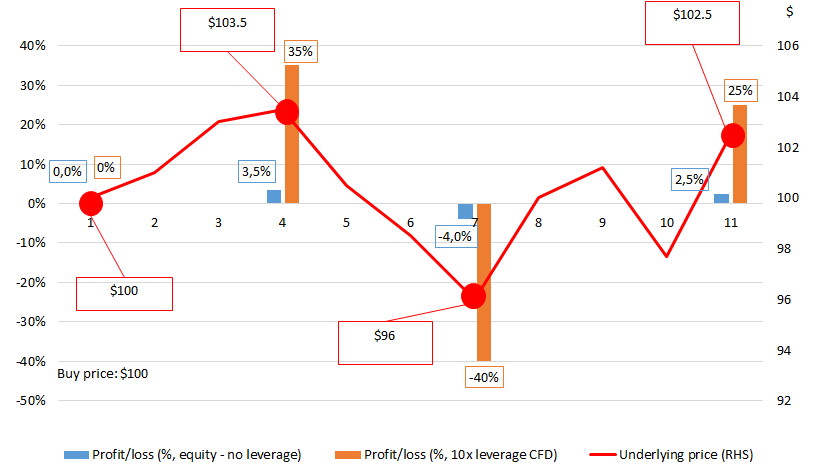
A margin call is something every leveraged trader hopes to avoid. It occurs when the value of your open position drops so significantly that your account balance can no longer cover the required margin. When this happens, you must deposit additional funds to maintain the position. For example, imagine you open a CFD position on a stock at $100 using $10 of margin. If negative market news causes the price to fall to $80, your $20 loss exceeds the initial margin. Your account would effectively show a negative balance of $10, and you would need to add funds to cover the shortfall.
Slippage
Trade execution is never completely instantaneous. Even a slight delay between placing an order and its execution can result in a different price than the one you initially saw. This phenomenon is known as slippage. Suppose you have $100 in your account and open four positions at roughly the same time, each requiring $25 in margin. If prices move slightly before execution and the margin requirement on the first trade increases to $26, you may no longer have enough available funds to execute all four trades. Small price movements during execution can therefore impact both costs and order fulfillment.
