Understanding Stop-Loss Orders
A stop-loss order is a trading instruction submitted through a brokerage platform that automatically closes a position once the asset’s price reaches a specific level set by the trader. Its main objective is to reduce potential losses if the market moves unfavorably against the position.
For short trades—where investors aim to profit from falling prices—the process functions in reverse. In this situation, the stop-loss is activated if the asset’s price climbs to a predefined level, helping prevent losses from expanding as the price rises.
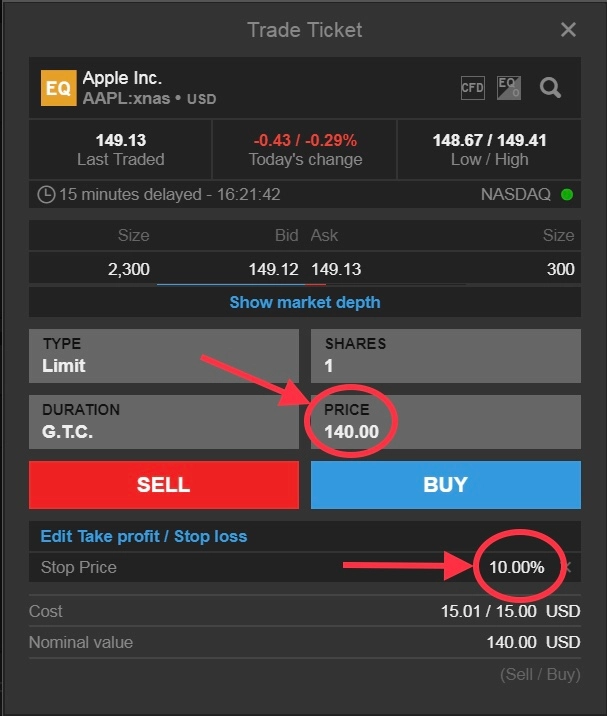
Traders can define the stop-loss threshold in two main ways:
Fixed price level:
You set a specific price at which the position should automatically be closed.
Percentage level:
The stop-loss is determined as a percentage move relative to the original entry price, whether it was a buy or sell position.
Using stop-loss orders allows traders to automate part of their risk management strategy, ensuring that trades are exited automatically once the market moves beyond the level of risk they are willing to accept.